How Penguin FM and TYTEN Built the UK’s First Truly AI-Enhanced FM Helpdesk

When Technology Becomes Human:
How Penguin FM and TYTEN Built the UK’s First
Truly AI-Enhanced FM Helpdesk
An industry first in facilities management: where automation was designed not to
replace people, but to set them free.
When Penguin FM introduced AI-powered automation into its helpdesk, Jill
Nicholson, Service Desk Coordinator, wanted nothing to do with it. She was nervous,
guarded, and saw technology as a threat to the role she had built and the
relationships she had spent years nurturing.Twelve months later, Jill is one of AI automation’s strongest advocates. Her story is
the story of this entire transformation: what happens when you design technology
around people, not over them.
The Problem No One Talks About
Facilities management businesses rarely fail because engineers cannot deliver. They
fail when the administration behind them cannot keep pace. As work volume grows,so does an invisible burden: late job sheets, drifting records, misaligned invoices,
and an endless cycle of chasing that no one signed up for.That burden does not just slow a business down. It wears people out. It creates burnout. It steals time from the conversations, the judgement calls, and the human connections that actually make an FM operation work.
Penguin FM saw this coming, and chose to act before it became a crisis.
Reimagining the Helpdesk as a Control Centre
The goal was never to strip away roles or replace systems. It was to fundamentally
redefine the purpose of the helpdesk – transforming it from an administrative clearing
house into a strategic control centre where people could do their best, most
meaningful work.Routine tasks needed to run reliably in the background. People needed to stay
focused on judgement, coordination, and communication: the things no algorithm
can replicate.- Mike Robinson, Director, Penguin FM
“We didn’t set out to build the most automated helpdesk. We set
out to build one where people could actually think, actually care,
actually have the time to pick up the phone instead of chasing a
job sheet for the fourth time that week.”
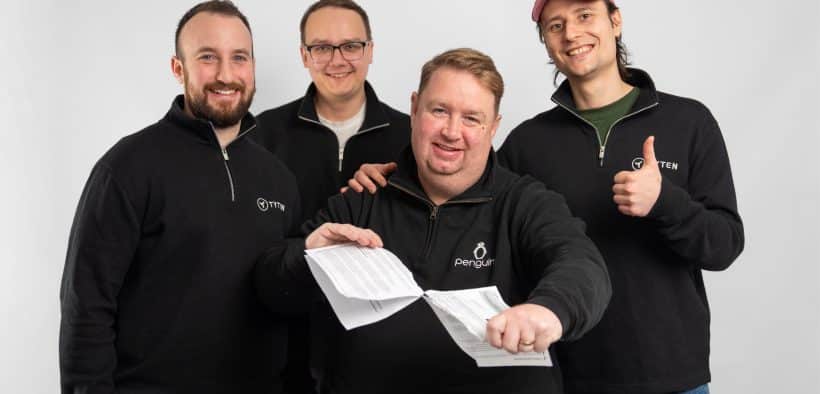
To make that vision a reality, Penguin FM partnered with TYTEN, an agentic AI
solution that automates the FM back office end to end, from service desk to
accounts. Together, they mapped every system, every process, every point of friction
– asking one question at every stage: where is administration taking time away from
people, instead of giving it back?
Within weeks, 20 automation modules had been designed, to which the majority are
already live, with more being deployed continuously. Each one was selected not just
for efficiency, but for the human capacity it would unlock.
The First Breakthrough: Job Sheets
Job sheets sit at the heart of FM operations. They unlock closure, billing, and
reporting. In practice, they also create constant friction. Contractors send them late.
Documents arrive incomplete. Chasing becomes a full-time job in itself.
Penguin FM with TYTEN, worked closely together to automate the entire cycle:
tracking, chasing, capturing, and updating, so it ran continuously in the background,
without a single member of the team needing to intervene.
40% increase in available helpdesk capacity in just 90 days.
That freed capacity did not go into a process metric. It went back to people: time to
build stronger client relationships, support engineers more effectively, and do the
work they actually came into FM to do.
Since the partnership began, work order volume has risen by 329.6%. Throughput
held firm. The operating model held. Most importantly, the team stayed focused on
delivery and relationships, not paperwork.
For an industry where scaling typically means hiring or burning out existing staff, this
represented a fundamentally different path.
Extending Automation to Accounts
Bills processing is repetitive, high-consequence work. Delays affect cash flow,
supplier relationships, and visibility. Applying the same human-centred principles
delivered immediate results.
20x reduction in manual bills processing within one month.
The outcome was not fewer people involved, but fewer hours spent on repetitive
handling, and more time available for oversight, decision-making, and the
professional relationships that keep a business healthy. Jill’s Story: The Human Heart of the Transformation
No award entry, no press release, and no set of metrics can tell this story better than
the people who lived it.
Jill Nicholson, Service Desk Coordinator at Penguin FM, is
where it starts.
Jill had every reason to push back. She had faced real adversity in her life, and the
prospect of technology changing the role she had built was deeply unsettling. In the
early days, she was nervous and guarded. Emails from Sergey, CTO at TYTEN,
went unanswered. The resistance was very evident.
Jill had every reason to push back. She had faced real adversity in her life, and the
prospect of technology changing the role she had built was deeply unsettling. In the
early days, she was nervous and guarded.
But something shifted. As the automation began handling the relentless
administrative burden – the chasing, the paperwork, the inbox management that
consumed her days – Jill saw what it actually meant for her. Not replacement.
Liberation.
“I’ll be honest, I was terrified at first. I thought they were building
something to replace me. But what actually happened was the
opposite – they took away all the things that were drowning me
and gave me back the time to do what I’m actually good at. I talk
to clients now. I build relationships with suppliers. I feel like I’m
doing my job properly for the first time in years.”
– Jill Nicholson, Service Desk Coordinator, Penguin FM
Jill’s journey from sceptic to advocate is the story of this entire project in miniature: AI
allowing humans to be more human.
A Happier, Healthier Workforce
For Edward Wick, the transformation has always been about more than efficiency
metrics. It has been about the kind of business he wants to run.
“We were creating burnout without realising it. The repetitive
admin load was grinding people down, week after week, and that’s
not the business I want to lead. What we’ve done with automation
isn’t about replacing anyone – it’s about removing the things that
were wearing them out. We now have a happier, healthier
workforce. You can see it in how they talk to clients. You can see
it in retention. You can see it in the energy in the office on a
Monday morning.”
– Edward Wick, Co-Founder, Penguin FM
This is the often-overlooked dividend of humanised technology. When you remove
the tasks that drain people, you do not just gain efficiency. You gain engagement,
retention, and a team that genuinely wants to deliver.
Opening the Door for an Industry
Facilities management has historically been a slow-moving space when it comes to
technology adoption. Penguin FM has chosen to change that – not by guarding what
they have built, but by opening their doors.
They gave TYTEN full visibility into every area of the business, because the belief is
simple: the entire FM industry benefits when one company proves what is possible.
This is not a competitive advantage to be kept behind closed doors. It is an
operational breakthrough that sets a new benchmark for what an FM helpdesk can
be.
They gave TYTEN full visibility into every area of the business, because the belief is
simple: the entire FM industry benefits when one company proves what is possible.
This is not a competitive advantage to be kept behind closed doors. It is an
operational breakthrough that sets a new benchmark for what an FM helpdesk can
be.
What Comes Next:
The Helpdesk transformation is nearly complete, the full back office is close to
operating end to end.
The measure of success will not be the number of processes automated. It will be
the hours returned to people. The conversations that happen because the chasing
stopped. The team members who finish a week feeling like the work they did actually
mattered.
“The goal was never to build the most efficient helpdesk. It was to
build one where people have the time and space to be brilliant.
We’re not done yet – we are not even close.”
– Mike Robinson, Director, Penguin FM
Why This Matters
This is not a story about AI. It is a story about people. About a helpdesk manager
who went from fearing technology to championing it. About an operations lead who
refused to deploy anything that did not make someone’s day easier. About a
managing director who measured success not in processing speed, but in whether
his team was happy.
It is a story about humanised technology – and it is already reshaping what facilities
management can be. https://www.penguinfm.co.uk/
If you are seeing similar patterns in your own operation, the most important step is to
start exploring what works in practice – and to learn from those who have already
begun.https://tyten.ai/